

Have you noticed how people now expect instant internet access, smooth video calls, fast downloads, and reliable mobile connectivity wherever they go? The rise of 5G has changed expectations completely. But what keeps these advanced communication networks running without constant interruptions?
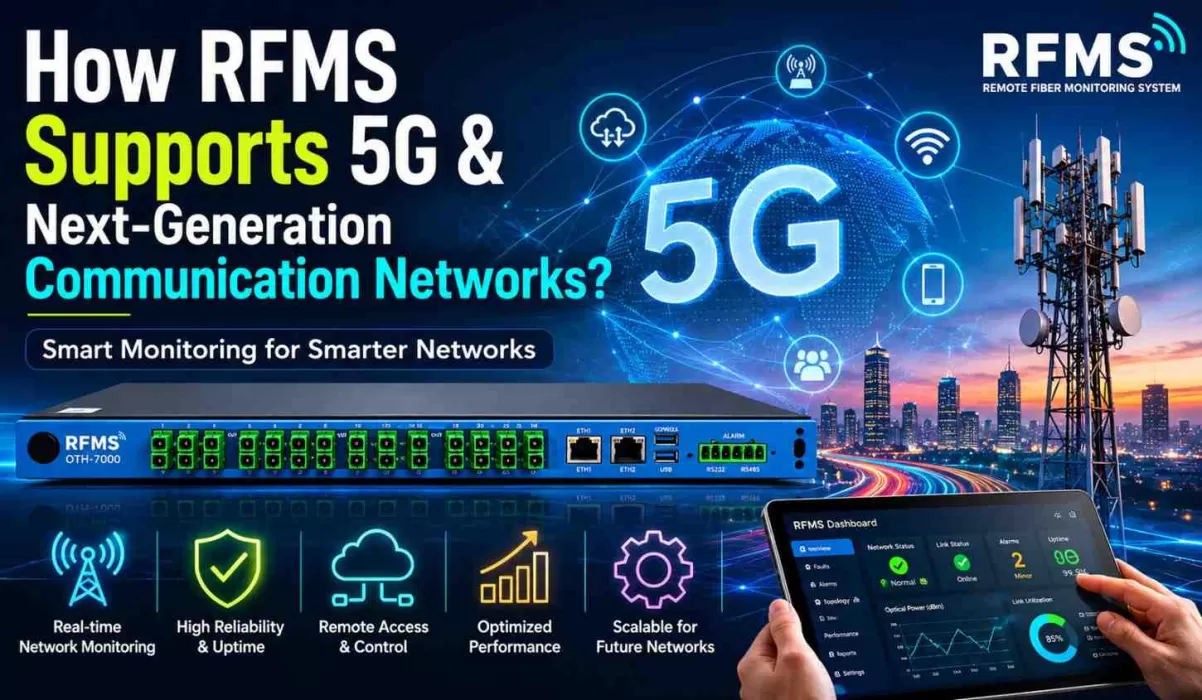
A Remote Fiber Monitoring System (RFMS) is a technology that monitors fiber optic networks from a central location. It continuously checks the condition of fiber cables and identifies issues such as signal loss, cable damage, or performance degradation before they create major problems.
The system works by connecting monitoring equipment to fiber infrastructure. It collects data from different locations and sends real-time updates to network operators. This allows technicians to identify faults quickly and take corrective action without waiting for customer complaints.
As 5G and next-generation communication networks continue to grow, fiber optic infrastructure becomes more important than ever. Understanding how RFMS supports these networks can help you see why telecom providers rely on this technology to deliver reliable connectivity.
Continuous Network Monitoring Improves Reliability
One of the biggest strengths of RFMS is its ability to monitor fiber networks 24 hours a day.
Instead of waiting for customers to report issues, network operators can detect unusual activity immediately. The system constantly checks network health and alerts technicians when something goes wrong.
This proactive approach reduces unexpected downtime and helps maintain the reliable connectivity that 5G users expect.
Faster Fault Detection Reduces Downtime
When a fiber cable gets damaged, every minute matters.
Traditional troubleshooting often requires technicians to visit multiple locations before finding the source of the problem. RFMS shortens this process by identifying the exact location of a fault.
Faster detection means quicker repairs. As a result, businesses and consumers experience fewer disruptions.
Supports High-Speed 5G Data Transmission
5G networks depend heavily on fiber optic infrastructure because wireless towers need strong backhaul connections.
RFMS helps operators maintain the quality of these fiber links. It identifies signal degradation before it affects network performance.
This support allows 5G networks to deliver the high speeds that users expect for streaming, gaming, and business applications.
Helps Manage Large Network Infrastructure
Modern communication networks contain thousands of kilometers of fiber optic cables.
Managing such large infrastructure manually can be difficult and time-consuming. RFMS centralizes network visibility and gives operators a complete overview from one location.
This centralized management improves operational efficiency and helps teams respond faster to potential issues.
Enhances Network Security and Protection
Fiber networks face risks from accidental cable cuts, construction work, environmental conditions, and unauthorized access.
RFMS continuously monitors network conditions and detects unusual changes that may indicate potential threats.
Early alerts allow operators to investigate issues quickly and protect critical communication infrastructure before service quality declines.
Supports Smart Cities and Connected Technologies
Smart cities depend on reliable communication networks to support traffic systems, surveillance cameras, public services, and connected devices.
These applications require constant connectivity and low latency.
RFMS helps maintain stable fiber infrastructure that supports smart city operations. This reliability ensures that connected technologies continue to function efficiently.
Improves Customer Experience
Customers rarely think about network infrastructure until something stops working.
A strong monitoring system reduces service interruptions and improves network stability. Users enjoy faster internet speeds, better call quality, and more reliable online experiences.
Satisfied customers are more likely to trust their service providers when networks perform consistently.
Reduces Maintenance Costs
Network failures often become expensive when operators discover problems too late.
RFMS identifies minor issues before they develop into major failures. Early intervention helps avoid extensive repairs and emergency maintenance activities.
This approach allows telecom providers to use their resources more effectively while maintaining network quality.
Supports Future Network Expansion
Communication demands continue to increase every year.
New technologies such as edge computing, Internet of Things (IoT), autonomous systems, and advanced cloud services require stronger network infrastructure.
RFMS provides the visibility needed to support network growth. Operators can expand their infrastructure confidently because they have continuous insight into network performance.
Enables Predictive Network Maintenance
One of the most valuable benefits of RFMS is predictive maintenance.
Instead of reacting after a failure occurs, operators can analyze network data and identify warning signs early. Small signal changes often indicate developing issues.
Telecom companies improve reliability and reduce operational risks by addressing these issues before they cause service disruptions.
Last Words
Remote Fiber Monitoring System has become an essential part of modern communication infrastructure. As 5G networks continue to expand, telecom providers need better visibility and control over their fiber networks.
It supports this goal by detecting faults quickly, reducing downtime, improving network reliability, and supporting future growth. It helps operators maintain the strong fiber backbone that powers advanced communication services.
As communication technology continues to evolve, the importance of proactive fiber monitoring will only increase. Organizations that use RFMS can improve network performance, deliver better user experiences, and prepare their infrastructure for the next generation of connectivity.
 Whatsapp Us