

Key Takeaways
• A GPS clock provides highly accurate time from satellite signals.
• Accurate timestamps are essential for cybersecurity investigations.
• Time synchronization keeps logs consistent across all network devices.
• Security monitoring tools rely on accurate timestamps to detect threats.
• GPS based time sources improve compliance and audit reliability.
• Reliable timing helps investigators reconstruct cyber-attack timelines.
• Centralized logging systems work better when timestamps are synchronized.
• Intrusion detection systems depend on accurate event timing.
• GPS clocks reduce confusion during forensic analysis.
• Strong cybersecurity systems require a trusted network time source.
Have you ever wondered why accurate time matters so much in cybersecurity? It may sound simple, but time is one of the most critical elements in protecting digital systems. When networks grow large and data moves across many servers, even a few seconds of time mismatch can create confusion.
IT teams of many companies ask practical questions. How do companies track cyber-attacks across different systems? Why do security logs sometimes fail to match events correctly? How can security teams investigate incidents if timestamps are inconsistent? And why do many modern networks rely on GPS based clocks for time synchronization?
To understand this, we first need to look at what a GPS clock actually is.
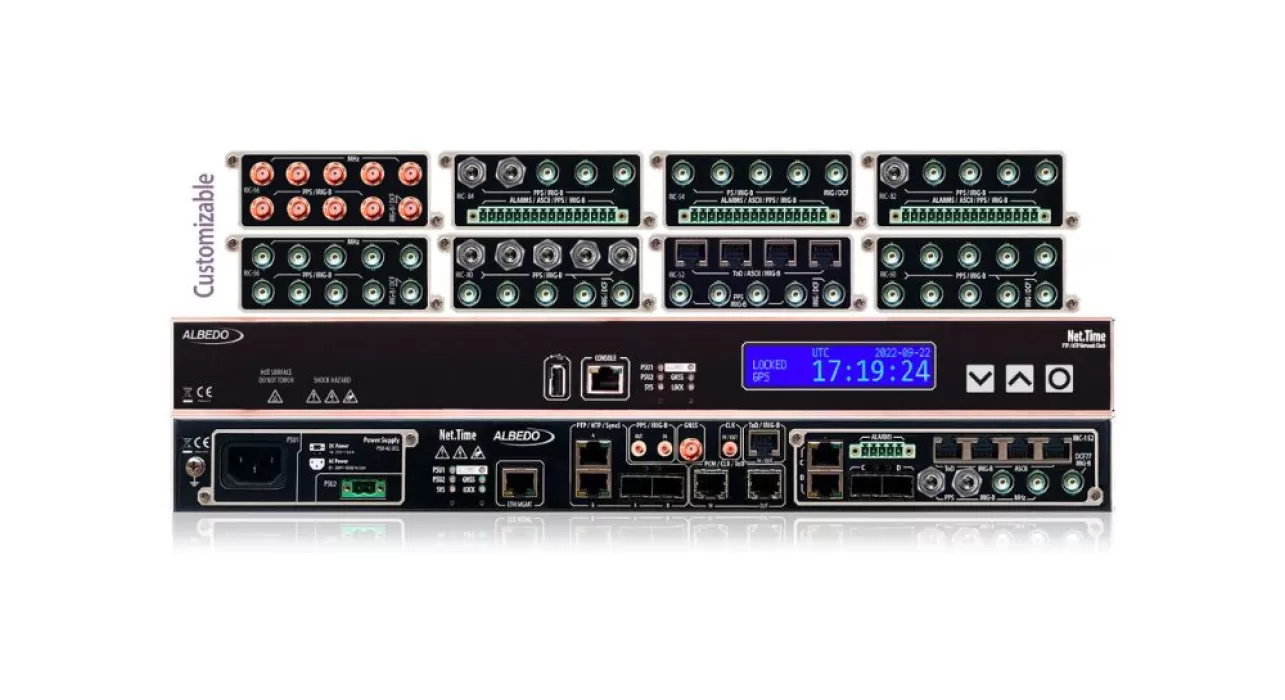
A GPS clock is a device that receives highly accurate time signals from satellites in the Global Positioning System. These satellites carry atomic clocks that provide extremely precise time.
The clock then distributes this time to servers, network devices, and security systems across the organization. The result is a single reliable time source for the entire network.
So, the real question becomes clear.
How exactly does a GPS clock strengthen cybersecurity and improve network logging? Let us find out here today.
Why GPS Clock Synchronization Matters for Cybersecurity & Network Logging?
You may think time accuracy only matters to large tech companies. But the truth is that time synchronization affects almost every digital service you use.
When you log into a system, send an email, access a website, or complete an online transaction, the system records the exact time of the event.
For IT teams, this becomes even more serious during a cyber-attack. Investigating a security breach depends on accurate logs.
Ways a GPS Clock Supports Cybersecurity & Network Logging
Ensures Accurate Timestamping Across All Systems
Every cybersecurity tool records event using timestamps. These events include login attempts, file changes, firewall alerts, and system errors.
If each device uses a different internal clock, the recorded times may not match. One system may show an event at 10:00 while another shows the same event at 10:02.
This clock solves this problem by distributing the same precise time to every connected device.
Improves Cyber Attack Investigation
When a security breach occurs, investigators study logs from many systems. They compare events from firewalls, servers, intrusion detection tools, and authentication services.
Without synchronized time, these logs can appear out of order. An attack may look like it started after the damage was already done.
A GPS clock keeps every device aligned to the same time reference. This allows investigators to reconstruct the timeline of an attack with confidence.
Supports Compliance and Security Standards
Industries require accurate time synchronization as part of security compliance. Financial institutions, telecom networks, and government systems must maintain reliable logs.
Regulatory audits often review log data to verify system activity. If timestamps are inconsistent, organizations may fail compliance checks.
Using it helps ensure that all recorded events follow a trusted time standard. This improves confidence in the integrity of security records.
Prevents Log Manipulation and Confusion
Cyber attackers sometimes try to hide their activity by manipulating system logs. One tactic is to change system time so that logs become misleading.
If each system controls its own clock, this attack can create confusion during an investigation.
A GPS clock provides an external trusted time source. Devices synchronize to this reference rather than relying on local clocks.
Improves Network Monitoring Accuracy
Network monitoring tools analyze traffic patterns and performance data. These tools often track events across multiple network locations.
Accurate time synchronization ensures that monitoring systems interpret events correctly.
A GPS clock helps monitoring tools record events consistently, which improves both security analysis and network troubleshooting.
Enables Reliable Log Aggregation
Many organizations use centralized logging systems. These platforms collect logs from hundreds or thousands of devices.
Security teams rely on these platforms to analyze large volumes of data and identify threats.
If timestamps from different devices are inconsistent, the log aggregator may display events in the wrong order.
This clock ensures all logs share the same time reference. This keeps aggregated logs accurate and easy to analyze.
Last Words
Cybersecurity often focuses on threats, firewalls, and encryption. But accurate time is one of the quiet elements that keeps the entire system working correctly.
A GPS clock provides a precise and trusted time source for networks. It ensures that logs remain consistent, investigations become easier, and security tools can detect threats more effectively.
FAQS
What is a GPS clock in network systems?
A GPS clock receives accurate time from satellites and provides precise time to computers servers and security systems.
Why is accurate time important for cybersecurity systems?
Accurate time helps security tools record correct event times which helps teams detect threats investigate incidents and track activities.
How does a GPS clock help network logging?
A GPS clock keeps all network devices on the same time so logs show events in the correct order.
How does synchronized time improve security monitoring?
Synchronized time helps security systems compare logs from many devices which makes it easier to detect suspicious activity.
Why do security teams rely on time synchronization?
Security teams need synchronized time to track attacks understand system behavior and review logs during investigations.
 Whatsapp Us