

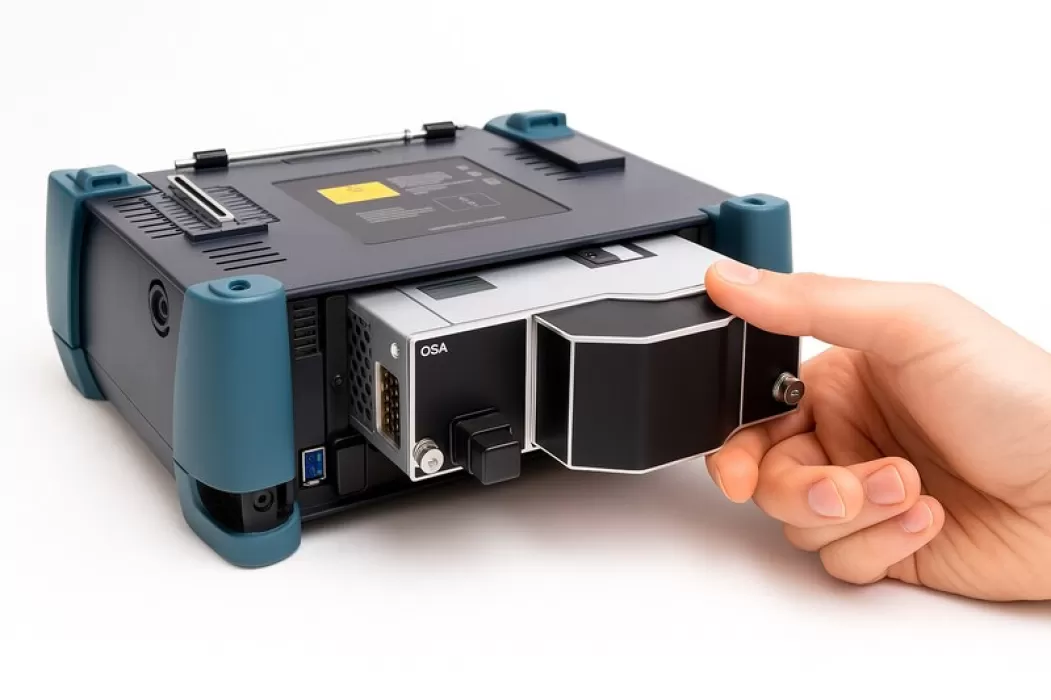
Do you wonder how engineers see and measure light signals in modern networks? An optical spectrum analyzer lets users view wavelength, power levels, and signal behavior in real time.
It plays a major role in fiber systems, research labs, and device testing. Users can find faults, check signal quality, and study new designs with clarity by reading the spectrum.
Read on to explore where this tool is used and why it matters.
Fiber Testing
Fiber optic communication testing uses an optical spectrum analyzer to observe light signals traveling through fiber cables. It shows signal power and wavelength across the spectrum.
Engineers use this data to check signal stability and spacing. The tool helps detect loss noise and unwanted signals that can affect data flow. It is also used to verify system performance after installation or upgrades in optical networks.
Wavelength Monitoring
Wavelength monitoring in DWDM systems uses an optical spectrum analyzer to view many channels at once. Each channel carries data on a specific wavelength. The analyzer shows spacing drift and power balance across the band.
During operation it helps spot channel shifts caused by temperature or aging parts. It is widely used in long distance and high-capacity fiber links.
Laser Analysis
Laser source analysis uses an optical spectrum analyzer to study the light produced by lasers. It displays wavelength accuracy and output power in clear detail. Engineers check spectral width and side modes to see how clean the laser signal is.
This process supports device testing and design work. It also helps detect drift or instability over time. Such analysis is common in telecom systems sensing applications and research environments.
Amplifier Testing
Optical amplifier testing uses an optical spectrum analyzer to view signal levels before and after amplification. It shows gain shape noise levels and channel balance across the spectrum.
Engineers study this data to see how the amplifier affects different wavelengths. The analyzer also reveals unwanted noise added during amplification.
Photonics Research
Photonics research and development relies on an optical spectrum analyzer to study light behavior in new devices and materials.
It allows researchers to view spectral patterns from experiments in real time. The analyzer helps compare test results with design goals. It is used when working with waveguides sensors and optical chips.
Component Testing
Testing optical filters and modulators uses an optical spectrum analyzer to observe how components shape light signals. The analyzer shows passbands stopbands and attenuation levels across wavelengths.
Engineers use this data to check filter response and modulation effects. It also reveals unwanted leakage or distortion. This testing supports product development and lab evaluation.
Fault Detection
Network fault detection uses an optical spectrum analyzer to find issues in fiber links. It helps spot sudden power drops missing channels or unexpected signals. Engineers can trace problems to bends bad connectors or damaged fibers by viewing the spectrum.
The analyzer also shows noise that may appear after faults occur. This method supports fast checks during outages and routine checks. It is widely used in live networks and service testing tasks.
Noise Analysis
Noise and signal distortion analysis uses an optical spectrum analyzer to study unwanted changes in light signals. It displays background noise spurious peaks and signal spreading across wavelengths.
The analyzer helps compare clean and affected signals during testing. This analysis is useful in system tuning lab experiments and network checks where signal clarity and stability must be examined carefully.
Lab Education
Educational laboratory experiments use an optical spectrum analyzer to teach students how light behaves in optical systems.
It allows learners to view wavelength power levels and spectral shape during hands on tasks.
Students can connect sources fibers and components to see real signal changes. This builds practical knowledge beyond theory.
Production Testing
Manufacturing and production testing uses an optical spectrum analyzer to check optical devices before they leave the factory. It measures wavelength accuracy output level and spectral shape for each unit.
This helps confirm that products meet design limits. The analyzer can quickly reveal defects or variation between units. It is widely used during quality checks for lasers modules and optical components.
FAQS
What is an Optical Spectrum Analyzer (OSA)?
An Optical Spectrum Analyzer is a tool that shows how light signals behave. It displays the wavelength, power level, and shape of optical signals so engineers can study and test them easily.
Why is an Optical Spectrum Analyzer important in fiber networks?
It helps engineers check signal quality, find problems, and confirm that fiber links are working correctly. This is important during installation, upgrades, and regular maintenance.
How is an Optical Spectrum Analyzer used in fiber testing?
In fiber testing, the analyzer shows how light travels through the fiber. It helps detect signal loss, noise, and unwanted signals that can reduce data performance.
How does an Optical Spectrum Analyzer help with laser analysis?
It measures laser wavelength accuracy, output power, and signal cleanliness. This helps engineers check if a laser is stable and working as designed.
Can an Optical Spectrum Analyzer help find network faults?
Yes. It can quickly show missing signals, power drops, or unexpected noise. This helps engineers locate damaged fibers, bad connectors, or other network problems.
Why is an Optical Spectrum Analyzer important in production testing?
Manufacturers use it to check optical devices before shipping. It ensures each product meets quality standards and performs the same across large production batches.
 Whatsapp Us