

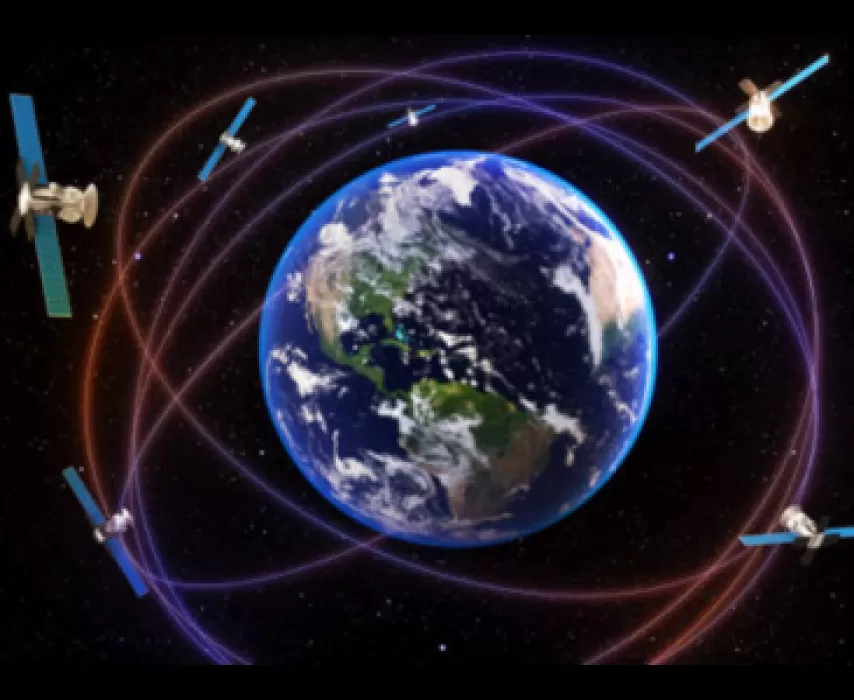
Proper GNSS antenna installation is critical for reliable and accurate time synchronization. This guide explains the best practices for antenna placement, cabling, delay compensation, and grounding to ensure stable performance in telecom and utility environments.
When discussing synchronization performance in substations or telecom networks, most attention is usually focused on the clock itself—oscillator quality, PTP profile support, holdover performance, or compliance with ITU-T and IEEE standards.
However, an often overlooked component that significantly affects synchronization performance is the GNSS antenna installation.
Why GNSS Antenna Installation is Important
When discussing synchronization performance in substations or telecom networks, most attention usually focuses on the time server itself — oscillator quality, PTP profile support, holdover capability, and compliance with ITU-T or IEEE standards.
However, one critical component is often overlooked: the GNSS antenna installation.
A high-performance time server can only perform as well as the reference signal it receives. Poor antenna placement, incorrect cabling, improper grounding, or missing delay compensation can silently reduce timing accuracy without immediately triggering alarms.
Common Issues Caused by Poor GNSS Antenna Installation
In real deployments, many synchronization problems originate from antenna installation challenges such as:
-
Limited sky visibility leading to intermittent satellite lock
-
Multipath reflections caused by nearby metallic structures
-
Excessive coaxial cable runs without proper amplification
-
Incorrect placement of lightning protection devices
-
Ground loops that weaken surge protection effectiveness
-
Unaccounted signal delay that affects time accuracy
Even small installation errors can introduce nanosecond-level timing inaccuracies, which can accumulate in environments like power utilities where precise phase and time alignment are essential.
Designed for Real-World Deployment Environments
Whether installed on a rooftop, within a substation yard, or across long cable runs in industrial environments, synchronization reliability begins at the antenna.
The objective of this guide is simple: to ensure the GNSS reference signal remains stable and accurate so that it does not become the weakest link in the timing infrastructure.
Before powering up the time server and validating PTP performance, it is essential to verify that the physical timing layer — the antenna system — has been installed correctly.
A stable network always begins with a stable reference.
Key Takeaways for GNSS Antenna Installation
-
GNSS antenna placement should provide clear 360° sky visibility with minimal obstructions.
-
Avoid installing antennas near metal structures or reflective surfaces to prevent multipath interference.
-
Use high-quality coaxial cables such as LMR400 and consider distance limits.
-
Long cable runs may require inline amplification to maintain signal strength.
-
Proper grounding and lightning protection are essential for equipment safety.
-
Account for cable signal delay to maintain accurate time synchronization.
-
Correct installation ensures stable timing performance for telecom and utility networks.
FAQ
What is a GNSS antenna?
A GNSS antenna receives signals from navigation satellites such as GPS, GLONASS, Galileo, and BeiDou. These signals provide accurate timing and positioning information for telecom networks, data centers, and utility infrastructure.
Why is proper GNSS antenna installation important?
Proper installation ensures stable satellite signal reception and accurate time synchronization. Poor installation can lead to signal loss, synchronization errors, and unreliable network performance.
Where should a GNSS antenna be installed?
A GNSS antenna should be installed in a location with clear 360° sky visibility. It should be placed away from buildings, trees, towers, or metallic structures that may block or reflect satellite signals.
What causes multipath interference in GNSS systems?
Multipath interference occurs when satellite signals reflect off nearby surfaces such as buildings or metal structures before reaching the antenna. This can reduce signal quality and affect synchronization accuracy.
Why is grounding necessary for GNSS antennas?
Grounding protects the antenna system and connected equipment from lightning strikes and electrical surges, helping maintain safe and reliable operation.
How can long cable runs affect GNSS performance?
Long coaxial cable runs can cause signal attenuation and delay. Using high-quality cables and, if necessary, inline amplifiers can help maintain signal strength and timing accuracy.
 Whatsapp Us